
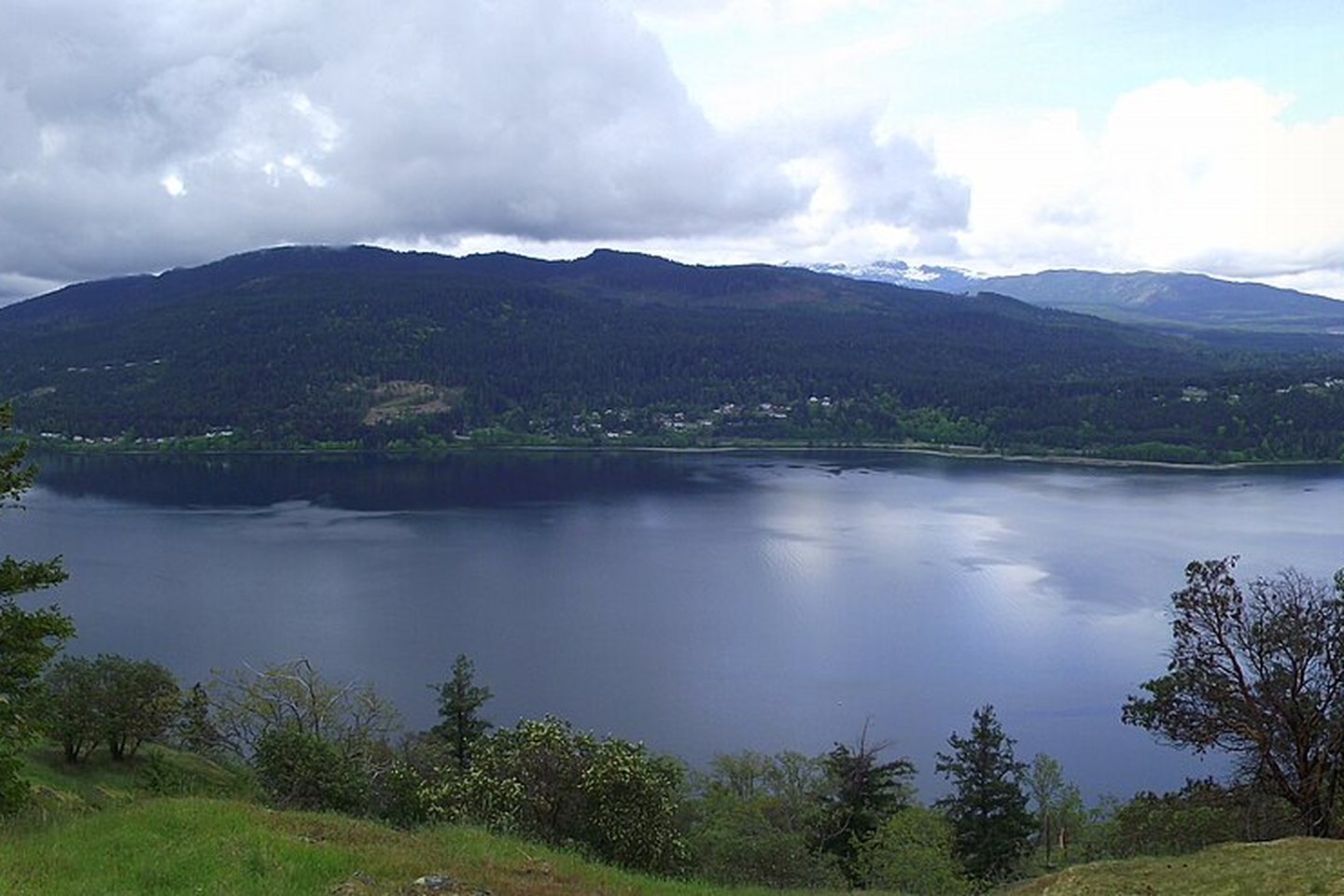

Bay lots and acreages
Nanoose Bay mixes houses that look at the water with houses up long driveways in the forest. Asphalt is typical. Metal shows up on steeper, open faces. If the roof is metal, say what is under the low edge: a deck, a path, a parked car.
An older house often has a lower roof over a walk-out or a porch. Water that gets past the upper shingles can show up in that lower ceiling. Say if the wet room is the lower floor.
A shop or a garage with its own roof is a separate surface. If the drip is in the shop and the bedrooms are dry, say shop.
Wind across the bay
Open lots lose edges in a southeaster. Walk the ground afterward. Pieces in the yard, on a roof that otherwise looks even, are a repair. A curled, pale slope was already finished before the storm.
Under the firs, needles hold water in the valley for days. Moss on the north face is ordinary and does not, by itself, mean the roof is done. A stain that returns after you have cleaned the gutter is the roof.
Say the side you actually have. A forest lot should not be described as waterfront, and a bluff lot should not be described as mossy unless the trees are really there.
Finding the house
Nanoose Bay and the road. The bay is large. The wrong shore wastes the morning. Say the road you turn onto.
A gate, a dog, and a place to turn a truck belong in the call. A code can wait until the day.
From the yard: colour of the shingles, a limb on the ridge, tar at a chimney if someone already tried a smear. From inside: the shape of the stain. Photos of both. Stay on the ground.
Around the house
Notch Hill and the waterfront roads are different drives. A house on the bluff has wind and a view and a slope that sheds toward the bank. A house in the trees off the inland road has moss and a gutter you can reach with a rake. Say which road, the way you would tell a friend coming for dinner.
Power lines cross some of these drives low enough to worry a truck with a ladder rack. If you have watched a delivery van duck, say so. The roof can still be reached on foot from the uphill side.
A second building, a studio or a suite over the garage, has its own roof age. Say if the wet ceiling is in that second roof. People describe the main house because that is the address.
A bluff lot sheds water toward the bank and the neighbour below, if there is one. Say if someone lives under your eave. Granules and storm pieces land on their deck. An inland lot can ignore that and talk about the fir. Both exist on this bay, sometimes on the same road.
A bluff lot sheds toward the bank and toward anyone living below. Say if a neighbour is under the eave. Power lines low over the drive worry a truck with a ladder rack. Say if a delivery van has to duck.
Questions
What should I notice?
Whether the wet wall faces the bay or the firs, and whether a tree is touching the roof.
Are the roofs new?
Both. Newer houses on cleared lots leak at one detail. Older places have chimneys, porches, and slopes that have gone pale.
What belongs in the call?
Nanoose Bay, the road, the wet room, and bay side or tree side.
How much does roof repair cost in Nanoose Bay?
Cost depends on the roof size, layers and access. A small leak repair is a different quote than a reshingle. Call and the roofer gives a number after hearing what is wet.
How fast can a roofer come out in Nanoose Bay?
Emergency leaks get priority. No one can promise a same-day visit. Read emergency roof repair before the visit if Nanoose Bay is taking water.